The "White Gold" of the industrial world—TIO2—is facing a mid-life crisis.
Long the undisputed champion of opacity and brightness, titanium dioxide is currently navigating a perfect storm of volatile pricing, stringent environmental regulations, and a global push for decarbonization.
As we move through 2026, the industry isn't looking for more TIO2; it’s looking for ways to use less of it., ushering in an era of high-performance extenders and the next generation of white pigments.
The State of the Market: 2026 Snapshot
The global Titanium Dioxide market remains massive, but its growth trajectory is being reshaped by efficiency. According to recent data from Mordor Intelligence and Grand View Research, the market is projected to reach approximately $31.79 billion by 2030, growing at a CAGR of 6.6%.
2025 saw price drops of nearly 8% in some regions due to oversupply, followed by sharp Q1 2026 price hikes. This volatility has forced manufacturers to prioritize extender technology to stabilize their bottom lines.
Why the Push for Alternatives?
It isn’t just about the money (though a 25% saving on raw materials is hard to ignore). The industry is reacting to three major "shifters":
Regulatory Pressure: The EU’s classification of TIO2 powder as a Category 2 carcinogen is pushing brands to seek "cleaner" labels.
Environmental Cost: Traditional sulfate-process TIO2 is energy-intensive. Newer alternatives can reduce the carbon footprint of a paint or plastic by up to 12% (Source: Dow/Coatings World).
Supply Instability: As evidenced by the January 2026 closure of Tronox’s 46,000-ton plant in Fuzhou, China, the global supply remains sensitive to local economic shifts.
Looking Ahead: The next 5 years
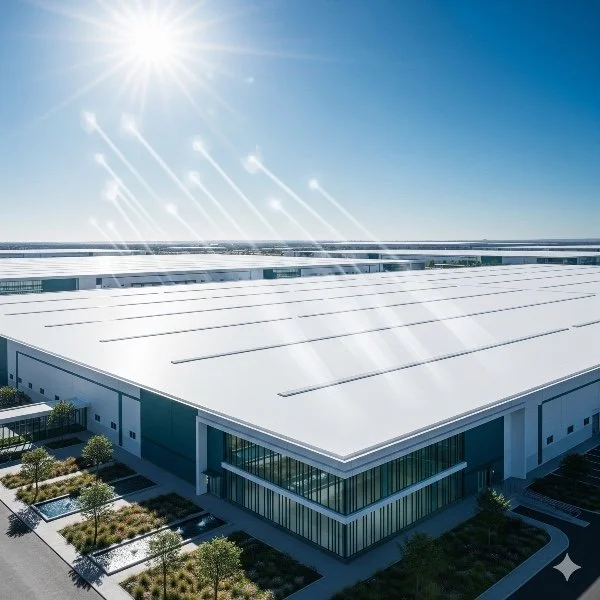
The industry direction is clear: Replacement and Hybridization. We are unlikely to see a 100% "Titanium-free" world in heavy-duty industrial coatings anytime soon, but the "Pure TIO2" formulation is becoming an endangered species. However, the demand for cool coatings are on the rise with equatorial city expansion.
Sustainability as a Service: Major players like Chemours and Tronox are pivoting toward "Ti-Pure" systems that integrate bio-based binders and high-efficiency spacers.
Novel Technologies: Pirta’s Nivi particle is outperforming current extenders by over 3x while providing exceptional solar reflectivity that reduces AC running costs by up to 15%. Nivi is a high-performance, plant-based cooling technology designed to replace Titania and slash embodied carbon by 80%.
The Rise of India: While China remains the largest producer of TiO2, India is emerging as the fastest-growing consumer, with a projected CAGR of 4.5%–4.9% through 2032, driven by massive infrastructure projects.
For formulators and manufacturers, the message for 2026 is simple: diversify or overpay. The future belongs to those who can master the spacing of their pigments. By integrating advanced extenders, companies aren't just cutting costs—they're insulating themselves against a volatile global market.