How to Calculate the ROI of a Cool Roof
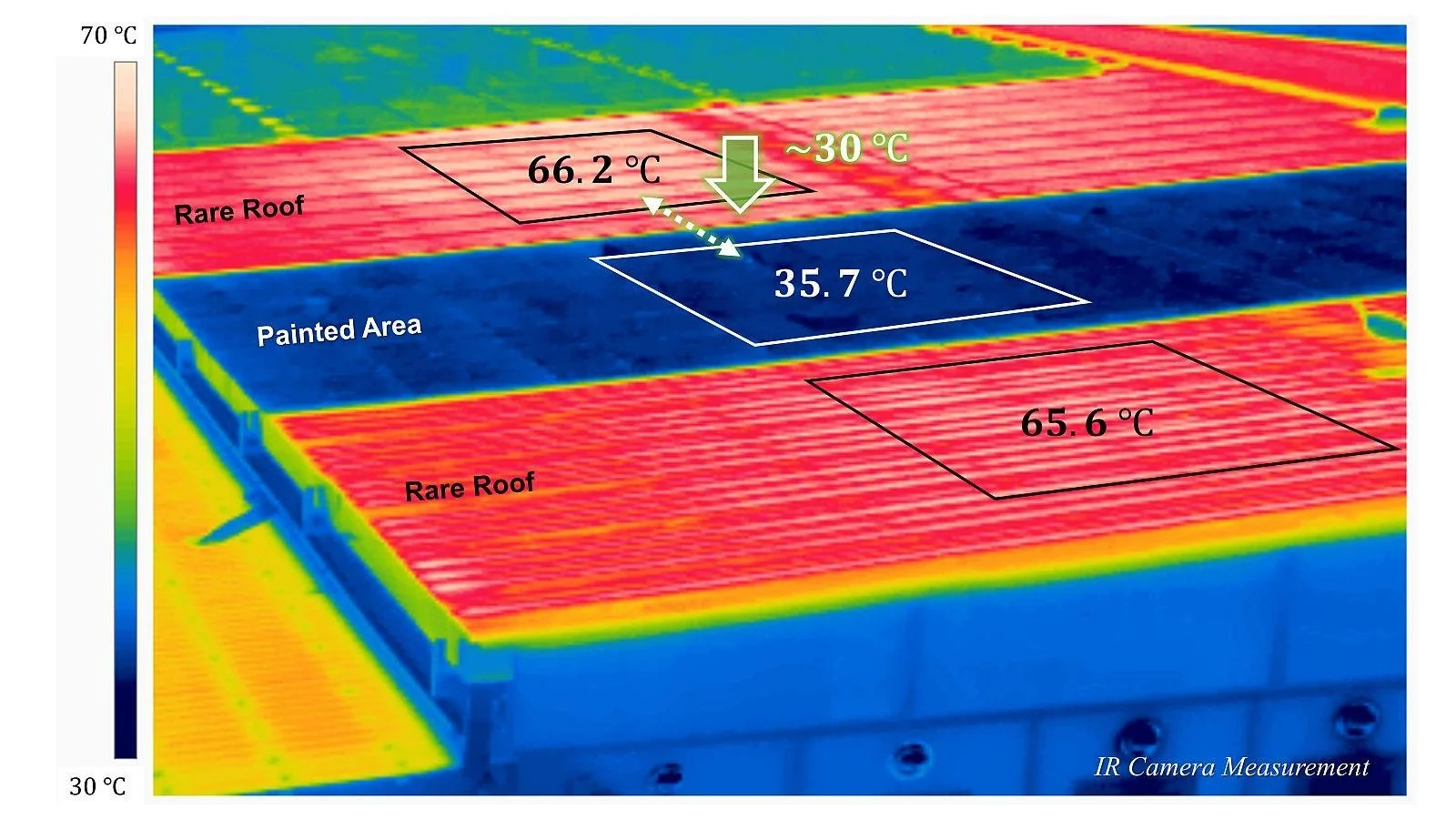
A cool roof can reduce solar heat gain by reflecting more sunlight and emitting absorbed heat more effectively. For building owners, however, the key question is not simply whether a roof becomes cooler—it is whether the investment produces a measurable financial return.
Calculating the return on investment (ROI) of a cool roof requires looking at the incremental installation cost, energy savings, maintenance, incentives, and expected service life of the roofing system.
Calculate the Incremental Cost
Start by comparing the cost of the cool-roof system with the conventional alternative.
Incremental Cost = Cool Roof Cost − Conventional Roof Cost
For example, if a conventional roof costs $80,000 and a cool-roof system costs $90,000, the incremental investment is $10,000.
This is particularly important when a building is already scheduled for reroofing. A cool-roof option may have only a modest premium over a conventional roof, whereas converting a relatively new roof solely to increase its reflectance can be considerably less economical.
Estimate Annual Energy Savings
The next step is to estimate how much the cool roof will reduce annual energy costs. Cool-roof performance depends on factors including solar reflectance, thermal emittance, climate, roof insulation, HVAC efficiency, building characteristics, and local utility rates.
A simplified calculation is:
Annual Net Energy Savings = Cooling Cost Savings − Additional Heating Costs
For example, assume a 20,000-square-foot building saves $0.06 per square foot annually in cooling costs but incurs an additional $0.02 per square foot in heating costs:
($0.06 − $0.02) × 20,000 = $800/year
This illustrates why ROI should consider both cooling savings and any potential winter heating penalty. The impact varies substantially by climate and building characteristics. For a more detailed analysis, building owners can use our energy savings calculator or similar building-energy modeling tools.
Calculate the Simple Payback Period
The simple payback period estimates how long it takes for energy savings to recover the additional investment:
Payback Period = Incremental Cost ÷ Annual Net Energy Savings
If the cool roof costs $10,000 more than the conventional alternative and produces $2,000 in annual net energy savings:
$10,000 ÷ $2,000 = 5 years
A five-year payback means the additional investment is recovered through energy savings after approximately five years.
Calculate Lifetime ROI
Payback does not tell the entire story. A cool-roof system can continue generating savings after the initial investment has been recovered.
A simplified lifetime ROI calculation is:
ROI = (Lifetime Benefits − Incremental Investment) ÷ Incremental Investment × 100
Suppose a cool roof costs $10,000 more and generates $2,000 in annual net savings for 10 years:
ROI = ($20,000 − $10,000) ÷ $10,000 × 100 = 100%
For professional investment decisions, a life-cycle cost analysis is preferable because it accounts for the timing of future savings. The US Department of Energy’s methodology, for example, discounts future energy savings to present value rather than treating a dollar saved 20 years from now as equal to a dollar saved today.
Include Maintenance, Incentives, and Demand Savings
A complete ROI calculation should also account for maintenance and incentives. Some cool roofs may require cleaning or recoating to maintain high solar reflectance. On the other hand, rebates or utility incentives can reduce the initial investment.
Commercial buildings may also benefit from reduced peak electricity demand. Because cooling demand often contributes to peak loads, lowering the building's cooling requirement can potentially reduce demand-related electricity charges, depending on the utility tariff.
The Bottom Line
The ROI of a cool roof depends on more than the roof's upfront price. A reliable analysis should combine incremental cost, measured or modeled energy savings, local utility rates, climate, maintenance requirements, incentives, and expected service life.
For building owners, the most useful question is therefore not simply, “How much does a cool roof cost?” but “How much value will the cool roof generate over its useful life?” By evaluating the investment on a life-cycle basis, organizations can make a more informed decision about whether passive cooling is financially worthwhile.
Sources
U.S. Department of Energy — Purchasing Energy-Efficient Cool Roof ProductsU.S. Environmental Protection Agency — Using Cool Roofs to Reduce Heat IslandsU.S. Department of Energy — Guidelines for Selecting Cool RoofsU.S. Department of Energy — Guidelines for Selecting Cool Roofs: Example ROI CalculationU.S. EPA — Cool Roofs and Peak Energy Demand