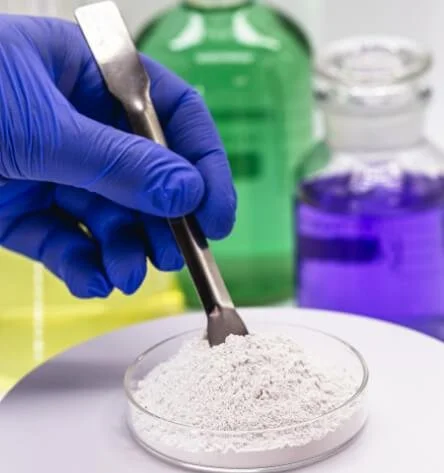
Titanium dioxide (TiO₂) has long been the gold standard for opacity, whiteness, and hiding power in architectural and industrial coatings. Its exceptional refractive index and light-scattering properties make it difficult to replace. However, its cost, manufacturing footprint, and exposure to global supply-chain volatility are forcing paint manufacturers to reconsider how much TiO₂ their formulations actually need.
For coatings manufacturers, the question is no longer simply how to source TiO₂ at the lowest price. It is how to achieve the required performance with less of it.
This is where TiO₂ extenders and alternative technologies are changing the economics of paint manufacturing.
The True Cost of Titanium Dioxide
TiO₂ is often one of the most expensive raw materials in a white architectural paint formulation. However, its economic impact extends beyond its purchase price.
Manufacturers must also consider:
Raw material volatility: Global supply, energy prices, production capacity, and geopolitical factors can create significant price fluctuations.
Formulation efficiency: TiO₂ particles can lose optical efficiency when they become crowded or agglomerate within a coating.
Carbon footprint: Conventional TiO₂ manufacturing is energy-intensive, contributing substantially to embodied carbon.
Supply-chain exposure: Heavy dependence on a single high-cost pigment creates procurement and production risks.
Traditional TiO₂ Extenders: Improving Pigment Efficiency
Traditional extenders reduce the amount of TiO₂ required by improving particle distribution, pigment spacing, and overall formulation efficiency.
Common examples include:
| Extender | Primary Function | Economic Advantage | Limitation |
|---|---|---|---|
| Calcium carbonate | Filler and pigment spacing | Low material cost | Limited opacity contribution |
| Kaolin clay | Improves spacing and optical properties | Moderate TiO₂ reduction | Formulation-dependent performance |
| Calcined kaolin | Improves opacity and dry hiding | Greater replacement potential in certain paints | Can affect sheen and rheology |
| Silica-based extenders | Particle spacing and surface properties | Improved formulation efficiency | Performance varies by grade |
| Talc | Barrier properties and reinforcement | Multifunctional filler | Limited direct TiO₂ replacement |
These materials can produce meaningful savings, but they generally cannot replicate TiO₂'s exceptional refractive index and opacity.
For example, specialty kaolin extenders can support partial TiO₂ replacement, with achievable levels depending on pigment loading, gloss requirements, and formulation chemistry. Some applications can accommodate approximately 5–10% replacement in gloss coatings, while certain matt formulations can accommodate higher extender loadings.
The challenge is that replacing TiO₂ with a lower-cost mineral does not automatically translate into lower overall formulation costs.
If opacity decreases, manufacturers may need additional paint to achieve the same hiding performance. This increases application costs and can eliminate the original savings.
The Economics: Cost per Kilogram Versus Cost per Performance
One of the biggest mistakes manufacturers make when evaluating TiO₂ alternatives is comparing ingredients solely on a price-per-kilogram basis. The more meaningful metric is cost per unit of finished coating performance.
A cheaper extender may reduce the formulation's raw material cost but also reduce hiding power, increase consumption, or require additional binder.
Manufacturers should evaluate alternatives using:
Cost per liter of finished paint.
Opacity and contrast ratio.
Coverage per liter.
Whiteness and brightness.
Durability and UV stability.
Processing and dispersion requirements.
Embodied carbon per unit of coating performance.
The ideal replacement maintains or improves these characteristics while reducing total formulation costs.
Nivi by Pirta: A New Approach to TiO₂ Replacement
At Pirta, we believe the next generation of TiO₂ alternatives should do more than simply extend existing pigments. Nivi is our plant- and polymer-based technology designed to replace a substantial proportion of conventional TiO₂ while introducing additional passive cooling benefits.
Unlike traditional mineral extenders, which primarily focus on pigment spacing and formulation economics, Nivi is engineered to deliver high-performance solar reflectivity alongside TiO₂ reduction.
Nivi offers several important advantages:
Higher replacement potential: Pirta reports that Nivi can replace at least 50% of TiO₂ in targeted applications, providing a different level of opportunity compared with conventional mineral extenders.
Lower embodied carbon: Nivi's plant- and polymer-based chemistry is designed to reduce embodied carbon. Pirta reports an approximately 80% reduction compared with traditional alternatives, subject to the relevant comparison methodology.
Enhanced solar reflectivity: Nivi is designed to reflect more incoming solar energy, helping coatings reduce surface temperatures and the demand for mechanical cooling.
Manufacturing compatibility: Nivi is designed to integrate into existing paint manufacturing processes without requiring major infrastructure changes.
Cost competitiveness: Pirta's objective is to deliver TiO₂ reduction without introducing a sustainability premium, with cost-price parity targeted in relevant applications.
Comparing Traditional Extenders with Nivi
| Performance Criteria | Traditional Mineral Extenders | Nivi by Pirta |
|---|---|---|
| TiO₂ reduction | Typically partial | Up to 50% |
| Primary mechanism | Particle spacing and filling | Advanced plant/polymer-based technology |
| Opacity contribution | Grade-dependent | Designed for high-performance replacement |
| Solar reflectivity | Limited or application-dependent | Core functional benefit |
| Carbon reduction | Generally lower embodied carbon than TiO₂ | Up to 80% reduction |
| Manufacturing integration | Usually formulation-dependent | Designed for existing processes |
| Economic objective | Lower raw material costs | Lower TiO₂ dependency and improved functional value |
The important distinction is that Nivi is not simply another inexpensive filler. It represents a different approach to optimizing the economics and functionality of white coatings.